
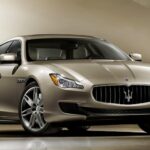

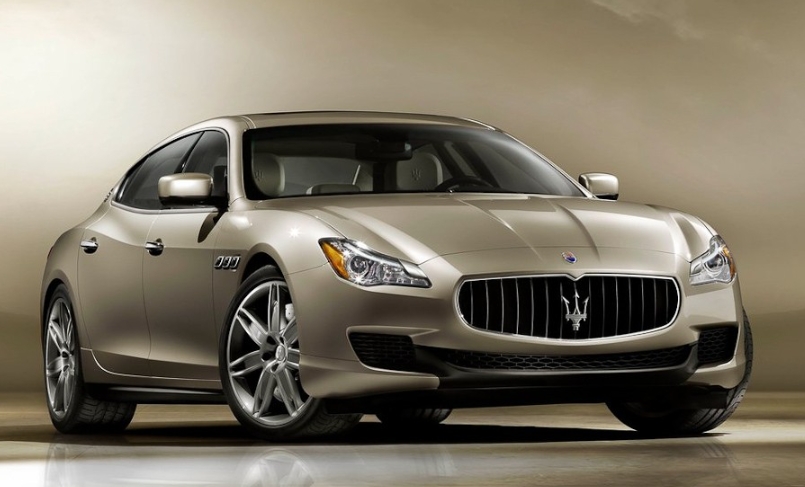
In 1963, Maserati unveiled a new four-door car at the Turin Motor Show and gave it a name that would later define an entire category. Quattroporte, literally meaning “four doors,” introduced the idea that a luxury sedan could carry genuine sports car performance without abandoning comfort, presence, or refinement.
More than half a century later, the Quattroporte still follows that original idea. Rather than chasing extreme numbers or purely rational benchmarks, Maserati continues to balance driving emotion, design, and luxury as equal priorities. The generation introduced in 2013 represents one of the clearest expressions of this philosophy.
A Luxury Sedan Driven by Character, Not Numbers
From a positioning standpoint, the Quattroporte does not attempt to overpower rivals through sheer size, feature lists, or value-for-money arguments. Maserati chose a different path. Long proportions, a low stance, and flowing lines give the car a sense of motion even at rest. Inside, the focus shifts away from digital spectacle and toward materials and atmosphere. Natural leather, real wood, and carefully finished metal surfaces define the cabin, placing tactile quality above screen-driven drama.
This approach reflects a deliberate choice. Instead of following trends, the Quattroporte emphasizes personality. It feels designed to be experienced rather than analyzed on a specification sheet.
Two Engines, Two Distinct Personalities
That same thinking shapes the powertrain lineup. Maserati offers the Quattroporte with both V6 and V8 engines, and each version delivers a clearly defined character.
The V6 model uses a 3.0-liter twin-turbocharged engine that delivers smooth, linear power. It suits daily driving and long-distance travel, offering strong performance without demanding constant attention. The V8 version moves the Quattroporte into flagship territory. Its 3.8-liter twin-turbocharged V8 focuses on effortless acceleration and confident high-speed cruising, reinforcing the car’s grand touring nature.
On paper, the difference between the two engines is easy to see.
| Version | Engine | Max Power | Max Torque | 0–100 km/h | Top Speed |
|---|---|---|---|---|---|
| Quattroporte V6 | 3.0L Twin-Turbo V6 | 330 hp | 500 Nm | 5.6 s | 263 km/h |
| Quattroporte V8 | 3.8L Twin-Turbo V8 | 530 hp | 710 Nm | 4.7 s | 307 km/h |
Yet numbers only tell part of the story. On the road, the Quattroporte avoids an aggressive or nervous personality. Acceleration builds progressively, and the rear-wheel-drive layout works with stability systems tuned for balance rather than intervention. Even on wet or uneven roads, the car communicates its limits clearly and maintains a composed, reassuring character. This is performance delivered with confidence, not tension.
Pricing and the Italian Interpretation of Luxury
Pricing follows the same logic. The Quattroporte does not position itself as the most rational purchase in its segment. Depending on engine and specification, typical prices fall within the following ranges in U.S. dollars.
| Version | Approximate Price (USD) |
|---|---|
| Quattroporte V6 | ~$105,000 – $115,000 |
| Quattroporte V8 | ~$140,000 – $150,000 |
| Special Editions / High Spec | ~$155,000+ |
At this level, buyers can easily find larger sedans or models that emphasize technology or rear-seat space. Maserati understands that and does not attempt to compete on those terms. Instead, the Quattroporte appeals to those who value style and emotional connection over pure rational comparison.
Comfort plays an important role, though not in an exaggerated way. The Quattroporte does not market itself as a rear-seat-first executive limousine, yet both front and rear passengers enjoy generous space and strong support for long journeys. Higher trims add ventilation, heating, and massage functions, while the overall ambiance remains warm and understated rather than showy.
For this reason, the Quattroporte does not try to please everyone. It resonates most strongly with drivers who feel ready to move beyond safe, predictable choices. Those who value design, engine sound, and the sensation of driving often form an immediate connection once they start the car.
In many ways, the Maserati Quattroporte is not chosen after endless spreadsheet comparisons. It is chosen because it feels right. In a segment where rational thinking and emotional desire constantly intersect, it offers a distinctly Italian answer: it does not need to excel at everything—it only needs to be remembered.