




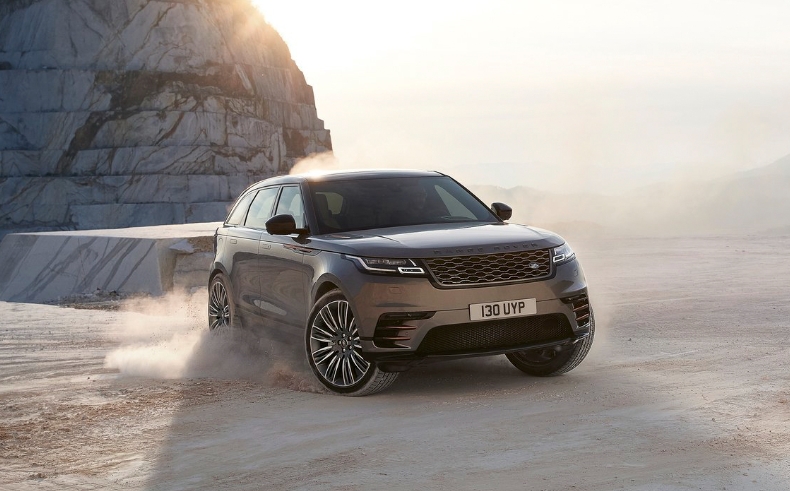
When the Range Rover Velar entered the market with a price tag hovering between $95,000 and $145,000, most people reacted the same way: it looks great, but it’s definitely not cheap.
That reaction, however, misses the real issue. In the $100,000 bracket, which happens to be one of the most mentally exhausting segments to shop in, the real question is whether the Velar makes life easier — or simply gives buyers another reason to hesitate.
This isn’t another article listing horsepower figures or screen sizes. Those details have already been covered to death elsewhere. What matters more is how the Velar positions itself, what kind of indecision it removes, and why some buyers stop comparing once they’ve spent time with it.
Where the Velar Actually Sits in the Range Rover Lineup
The name “Velar” comes from the Latin velaris, meaning veil or hidden. Interestingly, early Range Rover prototype vehicles in the 1960s quietly carried this name during testing.
That history still fits. Rather than shouting for attention, the Velar slips neatly into a space many buyers didn’t realize was missing. Within the Range Rover family, its role is clear: more mature than the Evoque, more restrained than the Range Rover Sport, and sized right in the middle at roughly 4.8 meters long.
Instead of chasing flagship status, the Velar focuses on balance. From the outside, it looks like a Range Rover that’s been visually tightened and smoothed out. Once inside, that impression deepens. The clean dual-screen layout, full-touch interface, and calm interior design often trigger the same quiet reaction: this finally feels like a modern Range Rover.
What stands out isn’t excess, but coherence. This isn’t a car built to impress spec-sheet warriors. It’s built for people who care about how things feel day after day.
Why the Velar Feels Easier Than Most at This Price
Around the $100,000 mark, buyers tend to spiral into comparison mode. Want sharper handling, and suddenly space feels tight. Prioritize comfort and presence, and the car starts to feel bulky in daily use. Chase brand prestige, and the interior tech already looks a generation behind. Add everything you want, and the price quietly runs away from you.
Here’s where the Velar quietly wins. It rarely forces buyers into uncomfortable trade-offs.
In real-world terms, most people gravitate toward the 3.0T core version, typically landing around $120,000. It feels complete without being excessive and doesn’t leave you wondering what you should have added.
| Version | Approx. Price |
|---|---|
| 2.0T entry model | ~$95,000 |
| 3.0T mid-level | ~$113,000 |
| 3.0T core model | ~$120,000 |
| High-spec versions | ~$130,000 |
| Launch / limited editions | ~$145,000 |
Put alongside its usual rivals, the pattern becomes clearer. The hesitation usually comes from the alternatives. The Macan is engaging to drive but exhausting to configure. BMW’s X4 offers handling but struggles to justify its presence. The GLE Coupe looks dramatic but limits choice. Audi’s Q7 and Volvo’s XC90 make sense on paper yet often fail to spark emotion.
The Velar rarely dominates a single metric — but it’s also very hard to fault at a glance.
Performance and off-road ability play a role too, even if most owners never push the limits. Very few Velars will ever see sand dunes or deep mud. Still, those capabilities translate into everyday confidence: calmer highway cruising, better composure over rough roads, and reassurance in bad weather. These aren’t things you notice in a short test drive; they’re things you appreciate months later.
Interior design is often where decisions become final. Many buyers arrive because of the exterior and commit after time spent inside. Compared with rivals that feel overly busy, conservative, or purely rational, the Velar lands in a comfortable middle ground — not flashy, but never dull.
Of course, doubt still exists. Some wonder whether they’re paying mainly for design. Others ask if, at this price, going bigger makes more sense. Both questions are fair. Yet bigger often means heavier, more tiring, and less inviting in daily life. The Velar avoids that trap by looking substantial without feeling like work.
One real-world example comes up often. A friend began with the Macan and loved the drive. Larger SUVs followed for their presence. Eventually, he brought his wife to see the Velar. After adjusting the seat and looking around, she simply said: “This is a car I’d feel comfortable driving every day.” No specs, no brand debate — just a feeling. That was the deciding moment.
In practice, Velar buyers share a familiar profile. Budgets typically fall between $100,000 and $140,000. They don’t want a nearly five-meter-long SUV, value design longevity, and want something that feels current rather than overdesigned. Very often, these buyers include women or households upgrading a second vehicle.
And that’s where the Velar’s real strength lies. It isn’t a car you lose sleep over comparing spreadsheets. It’s the one you sit in — and quietly stop comparing.
In this price range, being mentally easy to live with is a rare and valuable trait.