




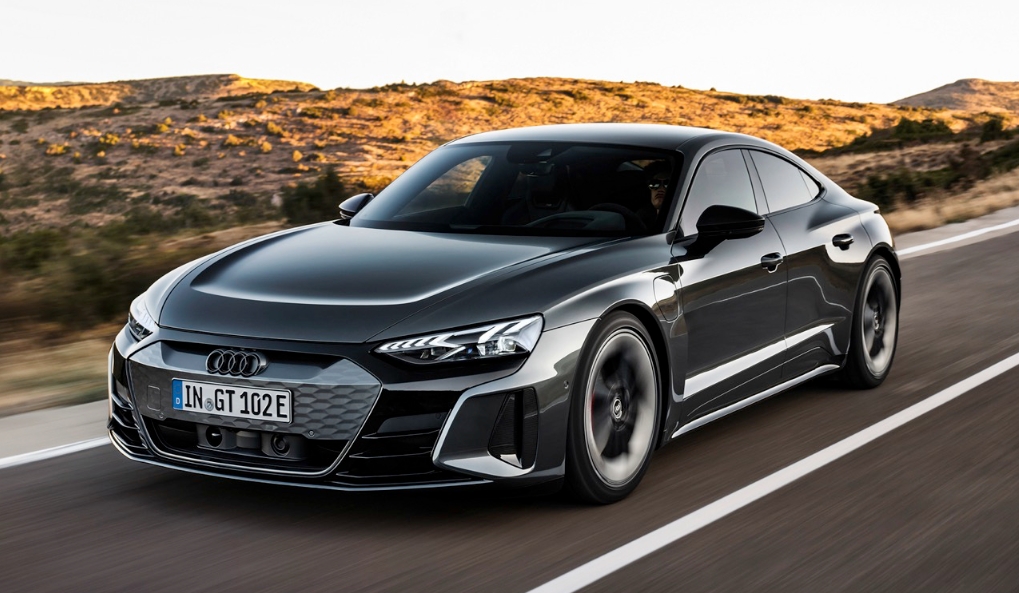
The moment I pressed the RS mode button, I realized this is anything but a typical electric car. Today, I want to put the cold specs aside and talk to you purely as a driver about this “electric beast in a tailored suit” the 2025 Audi RS e-tron GT Performance and the surprises it gave me, along with the thoughts it left me with.
The 2025 Porsche Taycan and Audi RS e-tron GT Performance are basically twin brothers in different Halloween costumes: different badges, different outfits, same bones underneath. The real magic isn’t in the sheet metal you see, but in the stuff you don’t. Bigger battery? Yep so you can actually leave your neighborhood without staring at the range meter. More power? Obviously. Faster DC charging? Of course, because sitting around at a charger is no one’s idea of fun. New suspension? Also yes, so it corners like it’s got a point to prove.
Personality and Character:
And then there’s the RS e-tron GT Performance itself, walking around like a halo car that knows it’s the favorite child. This isn’t Audi’s usual quiet confidence; this thing has an attitude. It’s electric power with a bit of an ego and that’s kind of the whole appeal.
Powertrain and Performance Specs:
On paper, Audi says the 2025 RS e-tron GT Performance is the quickest accelerating production Audi ever. Its 912-horsepower setup combines weight savings and improved efficiency to deliver brutal 0–60 mph runs. The rear motor alone sheds about 22 pounds, and the front motor now matches the rear with up to 600 amps of output, giving a more balanced, instant punch when you get on the throttle. Regenerative braking has been reworked too, now capable of recapturing up to 400 kW, which is pretty wild for something wearing license plates.
Battery and Charging:
The battery story is just as important. Capacity is up to 105 kWh a 12% increase while somehow dropping about 25 pounds in weight. DC fast charging now peaks at 320 kW, cutting the 10%–80% charging window from 21 minutes to roughly 18, assuming you can find a station that can deliver that much. The result is genuinely usable performance: the EPA estimates about 278 miles of range for the RS e-tron GT Performance. If you don’t absolutely need the full 912 hp, the 670-hp S e-tron GT is a bit more relaxed. It’s 0.7 seconds slower to 60 mph, but range climbs slightly to around 300 miles so you trade some drama for a bit more distance.
Driving Experience:
Out on the road, the performance feels… honestly, kind of insane, but in a controlled way. Acceleration is immediate, but it doesn’t feel unhinged. The car communicates what it’s doing clearly instead of just slamming you back and hoping for the best. The redesigned air suspension makes the whole thing feel calmer and more precise at speed, and the upgrades in battery capacity and charging speed take some of the anxiety out of using all that power. The RS e-tron GT Performance is addictive in the way a good roller coaster is: intense, physical, and over almost too quickly just without the screaming and cheesy sound effects.
Exterior Design:
Design wise, it’s a stunner. This car has a very clear mission, and it sits in that rare space between production car and concept. It’s low, muscular, and deliberate from every angle. The proportions are dramatic on purpose, the lines look like someone drew them with intent, not by accident. It doesn’t really bother pretending to be practical; the shape basically announces, “I’m here for performance first, everything else second,” and then backs it up when you drive it.
Interior and Build Quality:
Inside, the same philosophy continues. The materials feel properly premium, the surfaces are clean, and the cabin feels upscale without tipping over into gaudy. Fit and finish are what you’d expect at this price point tight, precise, no weird gaps or cost cut corners. Option the carbon fiber packages and it leans even harder into the performance vibe, adding visual lightness and just a hint of real weight savings for the nerds who care about that sort of thing.
Comfort and Features:
Of course, it still does the modern luxury car checklist. You get ambient lighting, front seats that are heated, ventilated, and have massage functions, and there’s even an optional leather free interior for people who prefer that. The driving position is spot on, but rear headroom is on the tighter side, and the atmosphere leans more toward “sporty cocoon” than “airy lounge.” It’s the kind of car you wear rather than just sit in. Cargo space is technically there, but clearly not the star of the show: about 9.2 cubic feet in the back and another 1.8 cubic feet up front. Enough for a couple of bags or a weekend away, but it’s obvious that practicality was not the first item on the design brief.
Price and Value:
Then there’s the price. The base 2025 Audi e-tron GT starts at about $126,795. Step up to the RS e-tron GT Performance, with that extra 0.7 second advantage to 60 mph and the full “fastest Audi” bragging rights, and you’re looking at roughly $168,295 to start. That’s a serious chunk of money, even in this segment. But for the kind of buyer who absolutely needs that level of speed, presence, and tech, it’s the kind of figure they’ll find a way to justify if not to others, then at least to themselves.
Is it expensive? Definitely. Is it over the top? Also yes. But if you want an electric car that doesn’t just move you, but kind of flexes every time you touch the throttle, the RS e-tron GT Performance makes a pretty lou