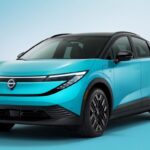

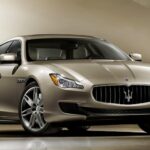
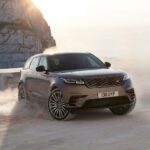
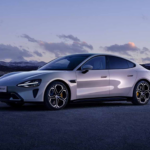
When people talk about electric cars, names like Tesla, BYD, or Chinese EV startups usually come up first. But if you pay attention in parking lots or on city streets, you’ll see more and more Volkswagen ID.3 and ID.4 quietly appearing. Many of these owners previously drove a Golf, Passat, or Tiguan. When it was time to switch to an EV, they didn’t just chase the flashiest new brand. They chose a Volkswagen instead. So the real question is simple: are Volkswagen EVs like the ID.3 and ID.4 actually worth buying as everyday family cars?
Performance: Enough Power, Less Drama
Many EV brands love to shout about 0–100 km/h times and “ludicrous” acceleration. A Tesla Model 3 or some aggressive Chinese EVs can hit 0–100 in 3–4 seconds. That’s fun on a test drive, but not always comfortable for kids, parents, or passengers in daily traffic.
The Volkswagen ID.3 and ID.4 are tuned differently. Depending on the version, 0–100 km/h is more like 7–8 seconds. That’s still quick enough to merge, overtake, and keep up with traffic. But it’s not so brutal that every green light feels like a roller coaster launch.
Think of it this way: some EVs feel like a theme park ride. A VW EV feels more like a fast, comfortable train. It’s still plenty quick, just not trying to scare you.
Range: Real-World Use Over Hype
Most buyers don’t live inside spec sheets. They don’t care only about a bold “600 km range” claim on a website. They care about a normal day: A/C on, some traffic, a mix of city and highway, maybe a stop at the supermarket or picking up the kids. The real question is: can they still get home without staring nervously at the battery gauge?
Volkswagen tends to be conservative with its range estimates and energy management. It focuses on usable real world distance instead of chasing the biggest number. Many owners put it simply: “The display doesn’t brag, and the car drives pretty much like it says.”
That doesn’t mean an ID.3 or ID.4 never needs planning for long trips. No EV is magic. But you’re less likely to feel misled by overly optimistic figures.
Daily Life: Flashy Tech vs. Grown-Up Image
A car is also part of how you show up in life. Some new EV brands build cars that look like moving tablets. They have huge screens, light shows, and wild shapes that look great in a parking garage or on social media. That’s great if you like being noticed and enjoy trying bleeding edge tech.
A Volkswagen ID.3 or ID.4, by contrast, feels more like an electrified premium family car. Driving an ID.4 to meet a client doesn’t scream “I’m testing a gadget.” It looks like a sensible, modern, professional choice.
On weekends, you can fill the trunk with camping gear, folding chairs, and a barbecue grill. Let the navigation and driver assistance handle the ring roads. Enjoy that familiar German chassis feel that VW has been refining for decades, now combined with quiet electric power.
This mix of German driving feel + EV powertrain suits families who want something new, but don’t want their daily life turned into a tech experiment.
What Real Buyers Say
If you listen to actual owners, clear patterns appear.
Some say: “I don’t want to be a test subject for a brand that’s only a few years old. At least Volkswagen has a history of building cars that last ten or twenty years.” They’re not against Tesla or NIO. They just don’t want to discover long term issues the hard way.
Others say: “My last car was a gasoline Jetta or Golf. When I switched to an ID.3, it felt familiar just charging instead of refueling.” Steering feel, seating position, and basic controls don’t feel alien. That makes the move from fuel to electric much less stressful.
Some are very down-to-earth: “When my parents hear it’s a Volkswagen, they stop worrying.” That’s brand trust you can’t manufacture overnight.
There are also buyers who tried a more high tech EV first and then came back to VW later. They say things like: “I loved the features, but I was tired of bugs and constant updates changing how the car behaved. The ID.4 just feels calmer.” For them, Volkswagen EVs are about predictability and peace of mind, not being on the cutting edge every single day.
Who Volkswagen EVs Are Not For
To be fair, Volkswagen EVs are not the best fit for everyone. If you want the biggest possible screen, the most extreme acceleration, or the very latest experimental self-driving features, a Tesla Model 3/Y or a cutting-edge Chinese EV might be more exciting.
Volkswagen’s approach is more conservative: solid software, useful driver assistance, and decent infotainment, but rarely the wildest or most futuristic interior. Some people love that “grown-up” feeling. Some people want maximum “wow.” It’s better to be honest about that up front.
From a Buyer’s Perspective: Why Pay for a VW EV?
If you’re comparing a Volkswagen ID.3 or ID.4 with other EVs like the Tesla Model 3, BYD, or NIO, you’re not just choosing whose screen is bigger. You’re choosing five to eight years of everyday life.
You’re choosing how safe you feel every time you get in. How comfortable your family feels in the back seat. How relaxed you are on a long trip without constantly refreshing your phone to look for chargers. And how much you trust the brand to still be there with parts and service in ten years.
Buzzwords like “German build quality,” “family EV,” “safety first,” and “high cost-performance” show up a lot online. With Volkswagen’s new energy vehicles, they’re not just marketing lines. They reflect the real experience of many owners who’ve gone from VW fuel cars to VW electric models.
Final Thoughts: Not the Flashiest, But Easy to Live With
In simple terms, the charm of Volkswagen EVs isn’t about blowing your mind for ten minutes with crazy acceleration. It’s about quietly fitting into your life for many years.
While some people are still arguing over whose 0–100 is faster or whose screen looks more futuristic, ID.3 and ID.4 owners are answering in another way: the best car isn’t always the flashiest one. It’s the one that actually matches your daily rhythm.
If you’re seriously considering an electric car, a good next step is simple: test-drive a Volkswagen ID.3 or ID.4 back to back with another EV you’re interested in. Don’t just compare spec sheets. Notice how you feel after half an hour behind the wheel, how your family reacts, and how much effort it takes to live with the car. That will tell you more than any brochure whether a Volkswagen EV is the right choice for you.